
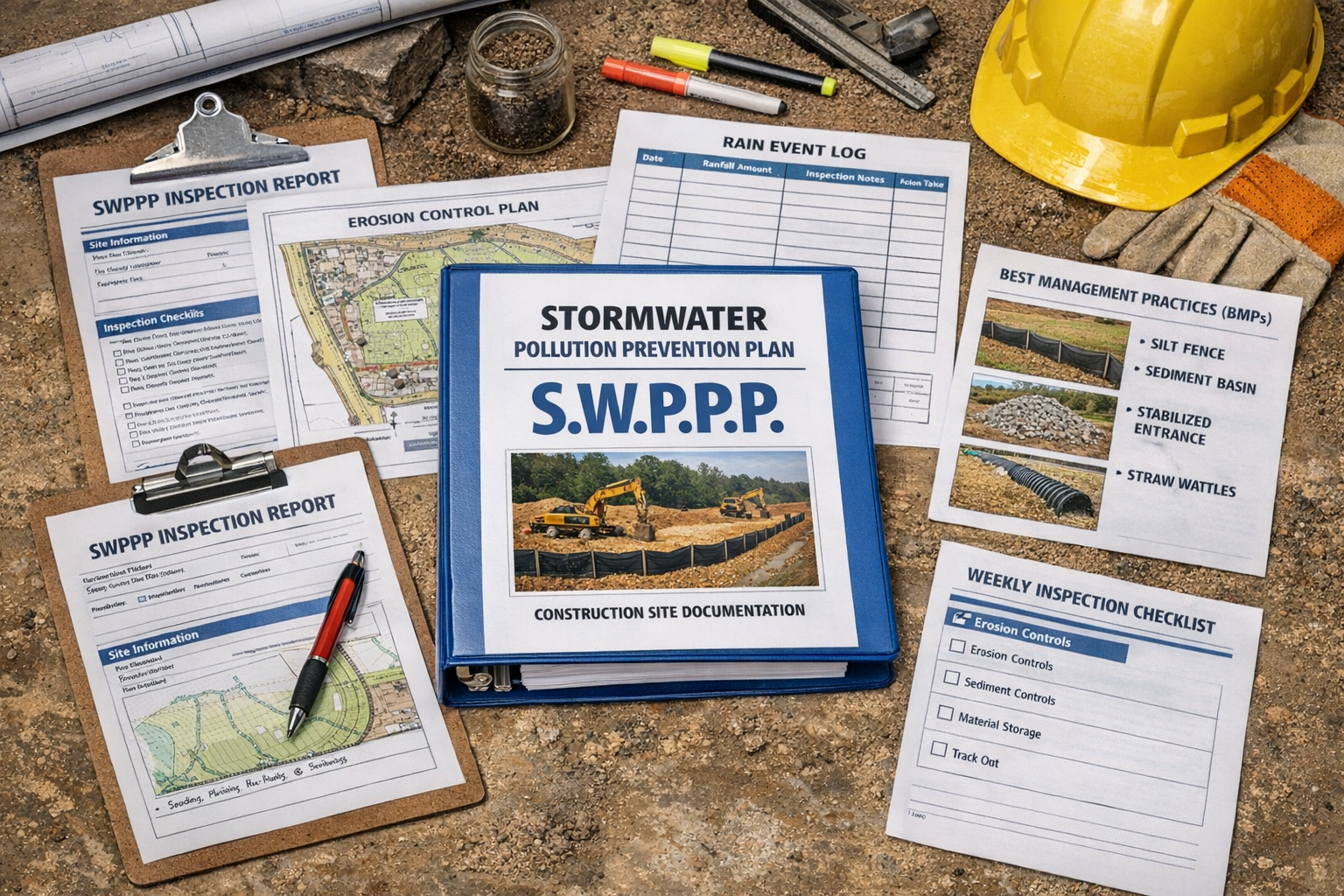
A Stormwater Pollution Prevention Plan (SWPPP) is the cornerstone of compliance under the Construction Stormwater NPDES program because it is the primary, enforceable document that identifies potential pollutant sources on a construction site and establishes the best management practices, inspection procedures, maintenance actions, and corrective measures needed to prevent stormwater pollution.
Construction activities expose soils and materials that can generate sediment, nutrients, metals, concrete washout, fuels, and debris, making sediment the most common and damaging pollutant discharged from construction sites.
The SWPPP translates permit requirements into site-specific actions by defining how erosion and sediment controls are installed and maintained, how inspections are conducted and documented, and how deficiencies are corrected within required timeframes.

Laurie Murphy, President of the Stormwater Training Center knows how regulators evaluate compliance. They compare on-the-ground conditions to what is documented in the SWPPP, making it a critical risk-management and compliance tool for owners and contractors alike.
When properly developed before submitting an Notice of Intent for a Construction General Permit, kept on-site, and updated (modified) as conditions change, a SWPPP reduces water quality impacts, supports local MS4 enforcement obligations, lowers the likelihood of violations and penalties, and improves overall construction site management.
In practice, the SWPPP is not just a permit requirement but a living breathing document that protects water resources while providing a clear, defensible framework for construction stormwater compliance.